Ten UK Deep-Tech Spinouts Turning Lab Prototypes into Factory-Ready Products

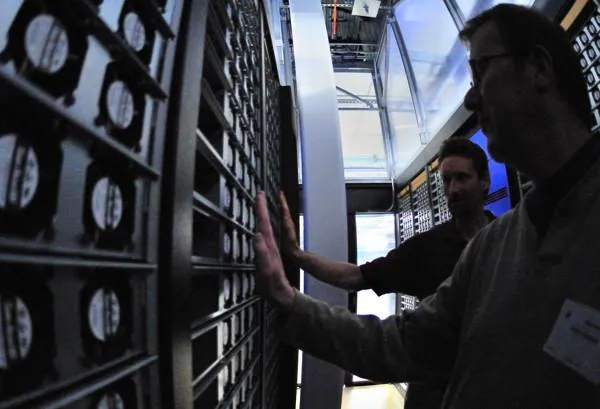
Photo: Albakry028, CC BY-SA 4.0, via Wikimedia Commons
The UK has spent two decades building one of the stronger deep-tech research bases in Europe. The harder question has always been the second act: converting a demonstrated laboratory result into a manufacturable product, at a yield and cost that a customer will accept. That transition is now the test by which spinouts are judged, and the ventures below are worth watching because of how they are approaching it rather than because of the elegance of their physics.
How this list was framed
Selection favoured companies spun out of UK universities with a clear hardware or systems proposition and a visible route to production. The emphasis is on commercialisation milestones — foundry agreements, pilot lines, licensing structures, first deployments — because those are the indicators that distinguish a scaling business from a well-funded research project. Descriptions are drawn from publicly stated positions; where a milestone is prospective, it is described as such.
1. Riverlane — quantum error correction, Cambridge
Error correction is the unglamorous layer that decides whether quantum computing becomes useful. Riverlane, spun out of Cambridge, has concentrated on decoding hardware and software that can keep pace with qubit architectures. The milestone to watch is integration depth with hardware partners rather than standalone benchmark figures: a decoder that only works in simulation tells you little about a system running in a dilution refrigerator.
2. Oxford Quantum Circuits — superconducting systems, Oxford
OQC has pursued a systems-led approach, building complete superconducting machines alongside a cloud access model rather than selling components. Its value to the UK cluster lies in the manufacturing discipline that a systems business imposes: cryogenics, wiring, calibration and serviceability all become engineering problems with tolerances. Watch for repeatable build and deployment cycles at enterprise customers.
3. Nu Quantum — quantum networking, Cambridge
Connecting quantum processors is the route to modular scale, and Nu Quantum has focused on the photonic interconnects and entanglement distribution that such architectures require. The commercial test is whether the company can position itself inside other vendors' roadmaps — a supplier role that demands early standardisation work and unusually close engineering collaboration.
4. Phasecraft — quantum algorithms, London and Bristol
Phasecraft, with roots at UCL and Bristol, works on the algorithmic layer: making near-term quantum hardware useful for materials and chemistry problems. Its relevance to manufacturing readers is direct, since simulation of molecules and materials is among the few applications with a plausible early payback. The milestone is demonstrated advantage on real hardware for a problem an industrial partner genuinely cares about.
5. Vector Photonics — laser sources, Glasgow
Photonic crystal surface-emitting lasers offer a route to high-power, high-efficiency light sources that can be fabricated with planar processes. Vector Photonics, based at Glasgow, is one of the UK's more manufacturing-literate photonics spinouts, and the question is transfer to volume: epitaxy, wafer-scale processing and packaging yield. This is where the Compound Semiconductor Applications Catapult in Newport earns its keep.
6. Paragraf — graphene devices, Cambridge
Graphene has a long history of laboratory promise and a short history of shipping products. Paragraf has concentrated on devices that can be made with conventional process steps, notably Hall-effect sensors for current measurement and magnetic field sensing. For industrial readers, the interesting metric is qualification: sensors inside inverters and traction systems must survive temperature cycling and electromagnetic abuse for years.
7. Levidian — methane-to-hydrogen and graphene, Cambridge
Levidian's plasma process cracks methane into hydrogen and graphene in a single step, which makes it a decarbonisation proposition for sites that already handle gas. The engineering challenge is not the chemistry but the deployment model: skid-mounted units, site integration, and a reliable market for the carbon product. Watch for units operating continuously at industrial customer sites rather than intermittent demonstrations.
8. Oxa — autonomy software, Oxford
Oxa emerged from Oxford's mobile robotics group and now positions its autonomy stack for industrial and commercial vehicles rather than private cars. The strategic insight worth noting is the decision to embed via vehicle partners rather than operate a fleet. For an engineering audience, the lesson is that safety assurance, vehicle integration and fleet support are where autonomy programmes succeed or fail.
9. Wootzano — robotic handling, Durham
Wootzano, a Durham spinout, builds robots with electronic skin for post-harvest handling — a narrow application with brutal economics, since food packing tolerates neither damage nor downtime. Deployments in packhouses, and the ability to support them internationally, are the metrics that matter. The company illustrates a broader point: tightly defined automation tasks are often a faster route to revenue than general-purpose robotics.
10. Echion Technologies — battery materials, Cambridge
Echion develops niobium-based anode materials aimed at fast-charging, high-power battery applications. Materials businesses scale differently from device businesses: the goal is qualification by cell manufacturers, followed by licensing into someone else's production line. Watch for agreements that put the material into a commercial cell format, which is the real validation milestone.
What the ten have in common
Three patterns recur. The first is a willingness to sell into someone else's product — as a supplier, licensor or embedded subsystem — rather than chasing a branded end product. That is less glamorous and considerably more scalable.
The second is early engagement with manufacturing infrastructure. The high-value manufacturing and compound semiconductor Catapults, the National Epitaxy Facility and university cleanrooms are not administrative conveniences; they are where process compatibility gets proven. Spinouts that defer this conversation until after a funding round usually discover expensive surprises.
The third is the centrality of packaging, test and qualification. Silicon and photonics ventures consistently underestimate how much of the cost, risk and schedule sits downstream of the device. A working die is perhaps a third of the way to a product.
The funding and talent constraints
Public support has matured. Innovate UK project grants, the National Quantum Technologies Programme, the British Business Bank's breakthrough-stage funds and university-linked investors such as Cambridge Enterprise and Oxford Science Enterprises provide a more continuous capital path than existed a decade ago. Series A rounds for hardware remain harder than for software, and the gap between grant money and institutional equity is still where promising ventures stall.
Talent is the sharper constraint. The UK produces excellent physicists and materials scientists and too few process integration engineers, packaging specialists and reliability engineers with production experience. Deep-tech ventures increasingly recruit from the semiconductor and automotive supply chains, which requires salary structures and equity packages that compete outside academia's orbit.
What to watch next
Over the coming year, three signals will be more informative than any funding announcement: named production partners, published qualification data, and evidence that units are operating in the field rather than in a demonstration hall. For UK engineering leaders assessing these ventures as suppliers or collaborators, those are the questions worth asking first.