Reading the Salt: How UK Coastal Engineers Are Building a Corrosion Ledger
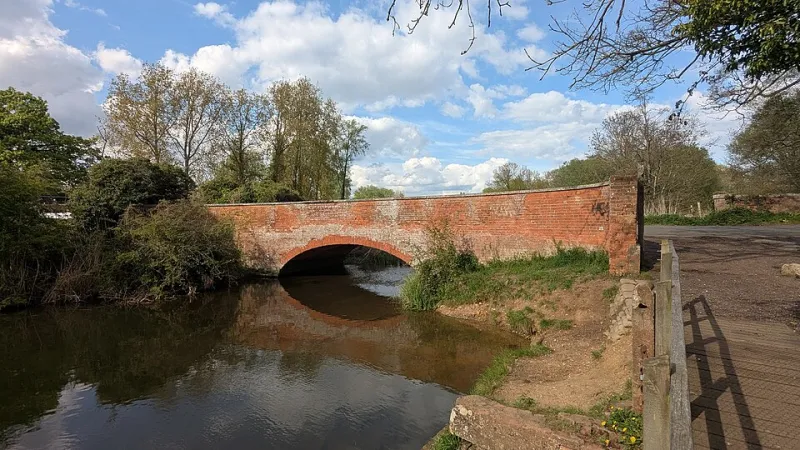
Photo: Sandy Gerrard , CC BY-SA 2.0, via Wikimedia Commons
Salt is patient. On UK coastlines it settles on reinforcement, works into joints and accelerates the electrochemical processes that turn steel into rust. The damage is rarely dramatic at first. It appears as staining, cracking or a change in potential readings, and it is often found during an inspection that arrives years after the conditions that caused it. Coastal infrastructure teams are now asking whether corrosion can be managed as a continuous signal rather than a periodic surprise. The emerging answer is a corrosion ledger: a structured record that combines sensor data, inspection history and exposure modelling to trigger maintenance before damage becomes structural.
From inspection cycle to signal stream
Traditional corrosion management relies on scheduled inspections. A bridge is inspected every few years, a pier is surveyed after storm damage, and flood defences are checked according to a risk-based programme. These cycles are necessary, but they are sparse. Between inspections, the environment keeps working. Salt deposition, wetting and drying, temperature cycles and structural loading all vary, and a structure that looked stable at the last survey may be accumulating risk in a location that no one has instrumented.
The corrosion ledger changes the unit of management from the inspection event to the exposure history. It records what the structure has experienced, not only what it looked like on a particular day. That sounds simple. In practice it requires disciplined data collection, careful sensor placement and an honest account of uncertainty.
Where sensors earn their place
Low-cost sensors have made continuous monitoring more affordable, but affordability is not the same as usefulness. A sensor that measures corrosion potential in a dry, sheltered location tells you little about the splash zone. A humidity sensor mounted where it never gets wet is a comfort, not a control. The teams getting value from corrosion ledgers tend to start with a small number of well-chosen locations: areas of known salt exposure, joints that trap water, drainage paths, structural connections and places where inspection has previously found early signs of distress.
The sensor mix often includes corrosion potential probes, chloride deposition collectors, humidity and temperature loggers, and strain or tilt sensors where movement matters. The exact choice depends on the structure and the failure mode being managed. The important discipline is to record why each sensor is where it is, what it is expected to show, and how a reading will be validated against physical inspection. A sensor without a validation pathway becomes an orphan data stream.
The ledger is a data-quality regime
A corrosion ledger is not a dashboard. It is a data-quality regime with a user interface. The ledger must record when a sensor was installed, how it was calibrated, what maintenance it has received and whether its readings are comparable with earlier periods. It must also record inspection findings in a structured way, so that a visual crack, a delamination or a chloride measurement can be related to the sensor history.
This is where many pilots stall. Low-cost sensors can produce frequent readings, but they can also drift, fail silently or be installed inconsistently. If the ledger does not distinguish between a genuine change in corrosion risk and a sensor that has gone out of calibration, it will generate false alarms and lose credibility. The teams that succeed tend to treat data quality as an engineering task, not an IT afterthought. They schedule calibration, record maintenance interventions and compare sensor trends with inspection evidence at every cycle.
Exposure modelling and the limits of correlation
Exposure modelling adds context. A structure's corrosion risk depends on wind-driven salt, distance from the shoreline, elevation, sheltering, surface orientation and drainage. Models can estimate exposure zones and help prioritise where sensors and inspections should be concentrated. They can also help explain why two apparently similar structures behave differently.
But models are not evidence. A corrosion ledger should use exposure modelling to guide attention, not to replace inspection. The most useful ledgers combine modelled exposure with measured deposition and physical condition, and they record where the model and the measurements disagree. Those disagreements are often the most informative part of the record. They may indicate a local effect, a construction detail or a change in the environment that the model does not capture.
Organisational discipline: who acts on the signal?
The technical components of a corrosion ledger are now reasonably well understood. The harder part is organisational. A sensor can detect a change, but someone must decide what it means and what to do. That requires a named owner for the asset, a maintenance budget that can be released before a structural defect is confirmed, and a process for escalating a signal that falls between inspection cycles.
Coastal infrastructure is often owned by local authorities, port authorities, the Environment Agency, Network Rail or private estates. Responsibilities can be split between asset management, engineering, maintenance and finance. A corrosion ledger that does not map to those responsibilities will produce reports that no one is obliged to read. The teams making progress tend to build the ledger around existing asset management systems and maintenance planning cycles, so that a trigger becomes a work order rather than a PDF.
A practical ledger for 2026
A credible starting point is one structure, one failure mode and one maintenance decision. Choose a coastal asset with a known corrosion risk, such as a pier deck, a bridge bearing shelf or a flood defence gate. Define the decision the ledger is meant to support: for example, when to schedule a detailed inspection, when to apply a protective coating, or when to restrict access. Then specify the minimum data needed to support that decision, the sensor locations that will provide it, and the inspection records that will validate it.
Record uncertainty explicitly. A reading that is within calibration tolerance is not the same as a confirmed trend. A visual inspection that finds no defect is not proof that corrosion is absent. The ledger should make those distinctions visible, so that decision-makers can see the difference between a signal that warrants action and a signal that warrants a closer look.
The maintenance signal
The salt ledger is not a promise of perfect prediction. It is a way of making corrosion visible between inspections, and of giving maintenance teams a defensible reason to act before damage becomes structural. For UK coastal infrastructure, where budgets are tight and exposure is relentless, that is a meaningful advance. The structures will still age. The point is to know how they are ageing, and to act on that knowledge while there is still time.