Proof of Performance: The Missing Layer in UK Robot Commissioning
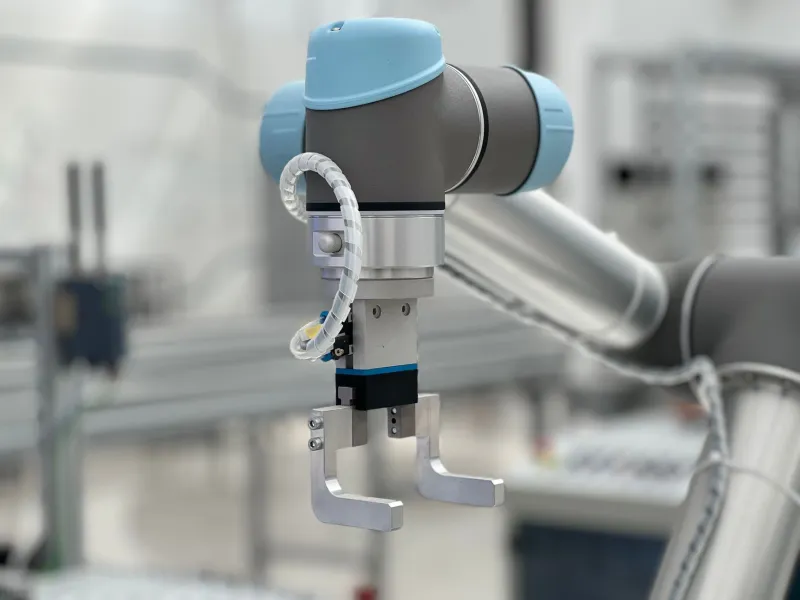
UK manufacturers have become more comfortable with the idea of automation. Robot cells are no longer confined to large automotive plants or highly controlled processes; they are appearing in food production, electronics assembly, plastics, logistics and general fabrication. The commercial case is often straightforward: relieve labour pressure, improve consistency, raise throughput and reduce exposure to repetitive strain. The harder question begins after the purchase order is signed. Can the plant prove that the cell actually does what was promised?
From installation to acceptance
Commissioning is often treated as the final technical hurdle before production. In practice, it is where capital investment meets operational reality. A robot that moves correctly is not necessarily a robot that performs correctly. Performance depends on the part mix, the upstream feed, the downstream buffer, the inspection regime, the operator interface and the maintenance plan. A cell can pass a basic safety check and still fail as an asset.
The pressure is structural. Capital approval cycles favour visible equipment; acceptance testing requires time, engineering attention and, sometimes, uncomfortable conversations with integrators. Many project teams are thin. Controls engineers are in short supply, and plant managers are under pressure to get equipment into service. The result is a familiar pattern: installation is celebrated, commissioning is compressed, and acceptance becomes a signature rather than an investigation.
That is the commissioning gap. It is not a shortage of robots. It is a shortage of evidence that the right robot has been integrated into the right process under the right conditions.
The evidence trail is not a binder
A credible commissioning record should function as an engineering asset, not a filing cabinet obligation. It should capture test scripts, sensor logs, cycle-time studies, defect data, change control and sign-off against defined criteria. It should link to the asset register and the maintenance system so that the performance baseline survives staff turnover.
In too many projects, the evidence is fragmented. The integrator holds the PLC backups. The plant holds the safety file. The quality team holds the first-article inspection. The finance team holds the payment milestones. No single record shows how the cell moved from simulated performance to validated production.
Digital commissioning records address that fragmentation. They do not need to be elaborate platforms. A versioned test protocol, a structured data capture routine and a clear acceptance log can be enough. The important discipline is that every claim is traceable to a test. If the integrator says the cell achieves a given cycle time, the record should show the part mix, the operator intervention rate, the run duration and the measurement method. If the plant accepts a temporary workaround, the record should show the residual risk and the closure date.
Simulation is a hypothesis, not a guarantee
Simulation has become a standard part of robot cell design. It helps teams check reach, cycle time, layout and collision risk before steel is cut. But a simulation is a hypothesis about reality. It becomes useful evidence only when it is tested against actual performance.
UK engineering teams should treat the simulation-to-reality delta as a formal commissioning metric. Where the model predicts a cycle time, the acceptance test should measure it under production-like conditions. Where the model assumes a certain infeed reliability, the test should introduce realistic variation. Where the model ignores changeover, the acceptance protocol should include it. The point is not to discredit simulation. It is to close the gap between the model and the cell before the gap becomes a production constraint.
This matters especially for mixed-model production. A cell that performs well on a single part family may struggle when the mix changes. Acceptance testing should therefore include boundary conditions: the smallest part, the largest part, the most awkward orientation, the highest changeover frequency and the most likely upstream stoppage. A showcase demonstration is not an acceptance test.
Acceptance criteria that survive production
Good acceptance criteria are written before the integrator is selected. They translate business requirements into measurable tests. Throughput, first-pass yield, availability, changeover time, operator interventions, energy per part and maintenance access should all be defined with tolerances. The criteria should also specify how performance will be measured and who will witness the test.
Commercial terms should reinforce the engineering logic. Retention, staged payment and remediation periods are not adversarial devices; they are mechanisms for ensuring that acceptance means something. If a cell is accepted on a demonstration rather than a production-like run, the plant carries the integration risk long after the final invoice.
Safety validation is a separate track. In the UK, robot cells must satisfy PUWER and relevant machinery safety requirements, with risk assessment and guarding appropriate to the application. Performance acceptance should not be confused with safety sign-off. A cell can be safe and unproductive, or productive and unsafe. Both dimensions need independent evidence.
The UK context
The UK automation market includes global equipment vendors, specialist integrators and a large base of small and medium-sized manufacturers. That diversity is a strength, but it makes commissioning discipline uneven. Smaller plants may lack in-house controls expertise and rely heavily on the integrator. Larger plants may have the expertise but struggle to coordinate quality, maintenance, production and finance around a single acceptance process.
Standards provide a foundation, but they do not replace project-specific evidence. A risk assessment can confirm that the cell is guarded correctly; it cannot confirm that the cell will hit the required output on a Friday afternoon when the upstream feed is drifting. That requires a test regime designed for the plant, not copied from a generic template.
Lessons for engineering teams and plant owners
- Define acceptance criteria before selecting the integrator, and make them measurable.
- Require digital commissioning records as a contractual deliverable, not an afterthought.
- Separate safety validation from performance validation, with separate sign-offs.
- Test the part mix and failure modes that production will actually present.
- Track simulation-to-reality deltas and close them before final acceptance.
- Train operators and maintenance staff during commissioning, not after handover.
- Use staged retention and remediation periods to keep evidence current.
The UK does not have a robot shortage so much as a proof shortage. The plants that get value from automation will be those that treat commissioning as an engineering discipline rather than an installation formality. A robot cell becomes an asset only when its performance is demonstrated, documented and accepted. Everything before that is a capital commitment with a moving arm.