Before the Cliff Edge: A Ten-Year Capability Forecast for UK Public Technology
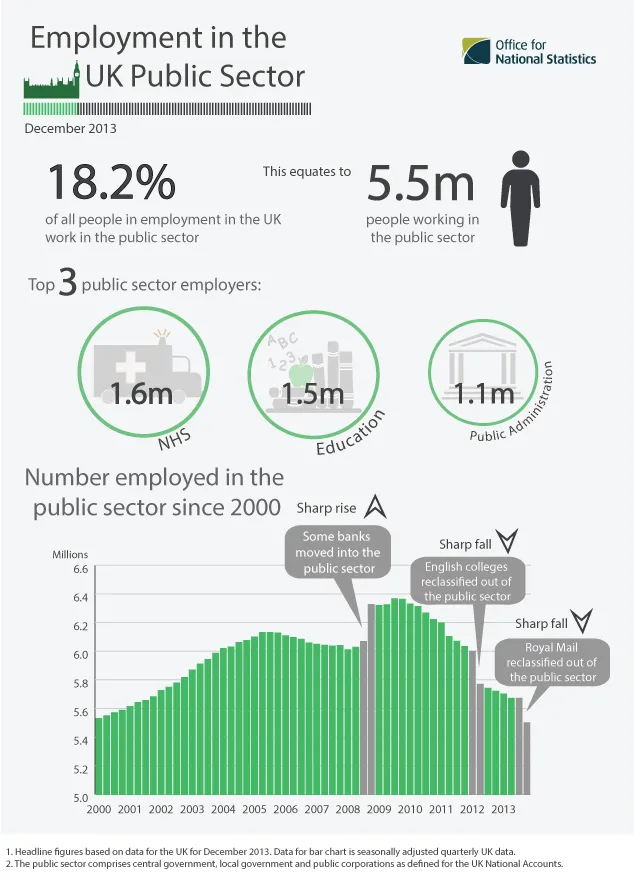
Photo: Office for National Statistics, OGL v1.0, via Wikimedia Commons
UK public sector technology planning has a familiar rhythm. A service is specified, a procurement is run, a contract is awarded, and an estate is refreshed on a cycle that rarely exceeds five years. Yet the obligations those systems support are rarely so brief. A council's adult social care casework, an NHS trust's diagnostic pathway or a central department's benefits platform may carry a ten-year service expectation, a twenty-year data retention duty and a security posture that must evolve long after the original supplier has exited. The gap between those two clocks is where the refresh cliff forms.
Two clocks, one estate
The procurement calendar is not the service calendar. Most public bodies plan technology around spending reviews, contract end dates and the practical horizon of an ICT team that is already stretched. That is understandable. It is also insufficient. A system that is replaced on a five-year cycle may sit inside a service obligation that runs for fifteen years, and the replacement itself may take two years to specify, procure, integrate and assure. If the planning horizon stops at the next contract break, the organisation is not managing a refresh. It is managing a series of surprises.
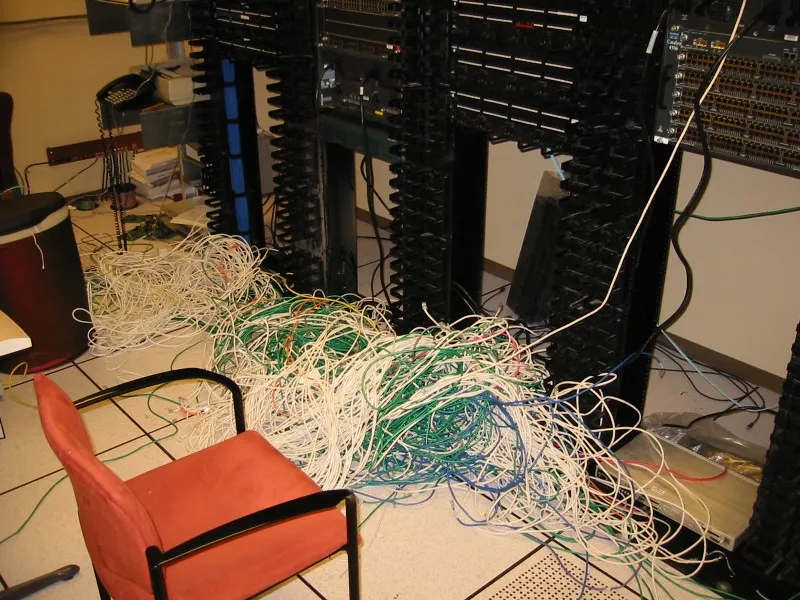
The refresh cliff is not a single date. It is the point at which several expiries converge: a platform reaches end of support, a supplier exits the market, the last engineer with deep knowledge of a legacy interface retires, and a security patch can no longer be applied without breaking a downstream process. By the time those events appear on a risk register, the options have usually narrowed to the most expensive ones.
What a capability forecast is not
A capability forecast is not an asset register with a longer date column. It is not a wish list for the next spending review, and it is not a substitute for a proper architecture function. It is a service-led view of what the organisation must still be able to do, year by year, and what technical, human and contractual conditions must hold for that to remain true.
The distinction matters because asset registers tend to describe what is owned. Capability forecasts describe what is depended upon. A council may own very little of its social care case management stack, but it depends on a specific integration, a specific data model and a specific set of supplier relationships. Those dependencies are the real estate.
A practical template for 2026
A workable forecast can begin with one service, not the whole organisation. Choose a service with a long statutory obligation and a visible technology dependency. Then populate a simple table with seven columns.
- Service obligation: what the organisation must deliver, for whom, and under what statutory or regulatory duty.
- Capability required: the specific operational capability that the service needs, expressed in plain language rather than product names.
- Current provision: the systems, contracts, interfaces and manual workarounds that currently support it.
- Critical dependencies: suppliers, platforms, data sources, skills and facilities without which the capability fails.
- Expiry signals: end-of-support dates, contract break points, supplier viability indicators, recruitment gaps and security advisories.
- Replacement lead time: the realistic time to design, procure, assure and migrate, not the optimistic time.
- Skills and security posture: who can operate and maintain the capability, and what assurance regime it must satisfy.
The table should be readable by a finance director, not only by an enterprise architect. If a column cannot be explained in a sentence, it is probably too abstract. The point is to make the dependency visible before it becomes urgent.
The finance test
Finance teams should be able to use the forecast to ask better questions. Which obligations are exposed if a supplier fails? Which refresh costs are unavoidable regardless of policy change? Where is the organisation relying on a single individual or a single integration that has no tested fallback? These are not technical questions. They are questions about continuity, risk appetite and the credibility of savings plans.
A forecast that cannot survive a finance review is not a forecast. It is a technical wish list. The discipline lies in connecting each capability to a budget line, a service outcome and a date by which a decision must be taken. That date is usually earlier than the contract end date, because the work of replacement begins long before the old system stops.
Looking ten years out without pretending to predict
A ten-year forecast is not a prediction. It is a structured way of exposing assumptions. No one can say in 2026 exactly which platforms will be available in 2036, but an organisation can say which capabilities it expects to still need, which dependencies it is unwilling to carry indefinitely, and which skills it must retain or rebuild. That is enough to change the conversation from reactive procurement to planned stewardship.
The political economy is difficult. A forecast that identifies future costs can be read as a bid for funding, and a forecast that identifies future risks can be read as criticism of past decisions. Both readings should be resisted. The purpose is not to assign blame. It is to give decision-makers an honest view of the estate they are inheriting and the obligations it must serve.
The discipline of the long view
UK public technology does not lack talent or ambition. It lacks a routine habit of looking beyond the next contract. A capability forecast, tested on one service in 2026 and extended carefully thereafter, would not solve every funding problem. It would, however, make the refresh cliff visible while there is still time to choose a route around it.