The Unglamorous Endpoint: Why UK Estates Need a Copper-Exit Register, Not Just a Switch-Off Date
The UK’s copper retirement is usually described as a date. For estates, that is the least useful fact about it. A lift emergency phone, a telecare pendant or a legacy alarm panel does not care about a programme milestone. It cares whether a call reaches an alarm receiving centre when someone presses a button.
That is why the final analogue line should be treated less as a migration task and more as a long-term service obligation. The organisations that manage UK housing, care settings, public buildings and industrial sites need a copper-exit register that records what depends on the old network, who owns each dependency, what has replaced it, what happens when the replacement fails, and how that assurance is evidenced.
The endpoint problem
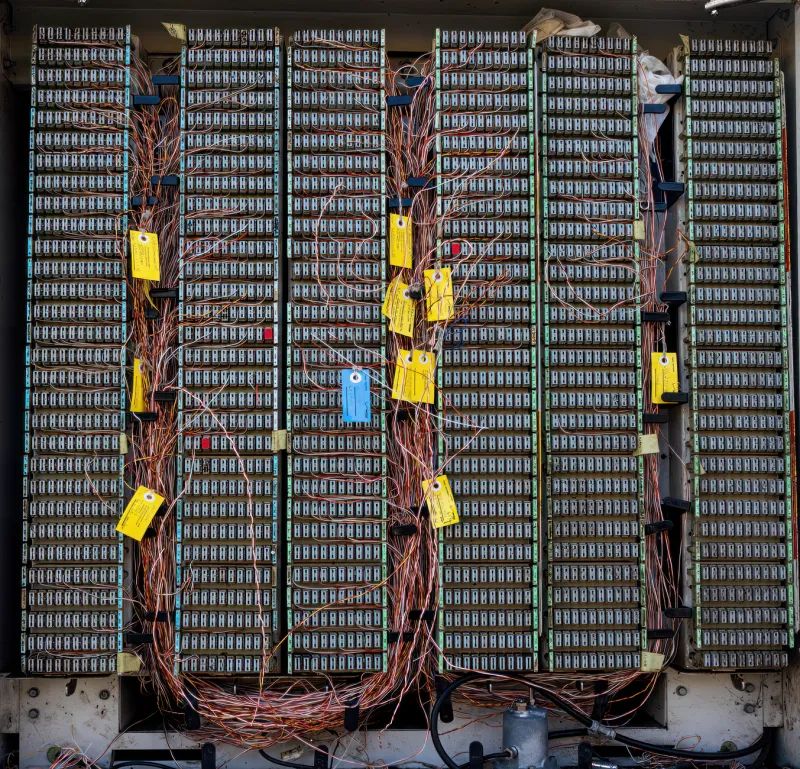
In many UK estates, analogue lines are not in the places that digital transformation programmes tend to look. They sit in plant rooms, risers, cupboards and service corridors. They serve lift alarms, door-entry systems, social alarms, fire signalling, environmental monitoring and legacy modems. Sometimes they are billed to a facilities team; sometimes to a housing association; sometimes to a contractor. Often nobody is quite sure.
As the analogue network retirement moves through 2026, the risk is not simply that a line goes dead. It is that the dependency behind the line was never registered in the first place. The last analogue line is rarely the one on the migration spreadsheet. It is the one nobody claimed.
That creates a classic long-tail problem. Bulk migrations can look complete while isolated endpoints remain live, unmonitored and poorly documented. The final line is not a single event. It is a slow boundary, and the organisations that cross it badly will do so because they managed a project rather than a service.
A register, not a spreadsheet
A copper-exit register should be more than an inventory of lines. It should record each dependency as a service obligation. For every endpoint, the register needs a line identifier, location, service supported, accountable owner, replacement technology, replacement evidence, fallback arrangement, last test date, next test date and escalation route.
The important distinction is between migrated and proven. A replacement device can be installed and still fail under real conditions. A telecare unit may work on a desk but not when the broadband link drops. A lift phone may connect in normal operation but not when the lift has no power. The register should capture evidence, not assertion.
It should also record the owner by role, not just by team name. A named accountable person gives the register operational weight. Without that, the document becomes another spreadsheet that is updated until the project closes and then forgotten.
Evidence over assertion
Replacement evidence should be specific to the service. For a lift, it may include a test log signed by a competent lift engineer and confirmation that the call reached the monitoring centre. For telecare, it may include a test with the alarm receiving centre and a check of battery backup. For fire signalling, it should align with the responsible person’s duties and the relevant British standards. For door entry or access control, it may require a test of the fallback path when the primary network is unavailable.
The register should record what was tested, by whom, when, under what conditions and with what result. That evidence does not need to be bureaucratic, but it does need to be retrievable. A simple note saying migrated is not an assurance trail. It is a hope.
Fallback arrangements that are actually tested
Even after migration, fallback matters. A replacement service may depend on broadband, cellular coverage, battery backup or a manual process. The register should describe the fallback arrangement and show that it has been tested. A fallback that has never been exercised is not a fallback; it is a diagram.
For UK estates, this is where practical ownership becomes essential. Facilities teams, housing managers, care providers and maintenance contractors all have a role, but someone must own the test schedule. The register should make that schedule visible. If a lift alarm has a dual-path signalling arrangement, when was the secondary path last tested? If a telecare device relies on cellular backup, what happens in a poor-signal area? If a legacy alarm panel has no credible replacement, what interim measure is in place and who has accepted the residual risk?
Those questions belong in the register, not in a post-incident review.
The public assurance trail
For public sector bodies, housing associations and regulated care settings, assurance should be visible beyond the project team. A public-facing summary can report the number of known dependencies, the proportion with tested replacement evidence, the proportion with tested fallback, and the outstanding risks. It does not need to expose sensitive technical detail. It does need to show that the organisation knows what it owns.
That assurance trail matters for residents, patients, boards and regulators. It also changes behaviour inside the organisation. Once a register is published in summary form, the gap between what is claimed and what is tested becomes harder to ignore.
A service obligation, not a switch-off
The final analogue line is not a migration task with a completion date. It is a service obligation that outlasts the programme. The copper-exit register should be a living document, reviewed after migration, after incidents and at least annually. It should sit alongside asset management, not outside it.
As 2026 progresses, UK operators should resist the temptation to declare victory when the bulk of lines have moved. The unglamorous endpoints are the ones that will define the quality of the transition. A register with named owners, tested failover and an evidence trail is not glamorous either. But it is the difference between a switch-off and a service that still works when someone needs it most.