Ten Pavements Worth Watching: The UK Towns Turning Streets into Systems Labs
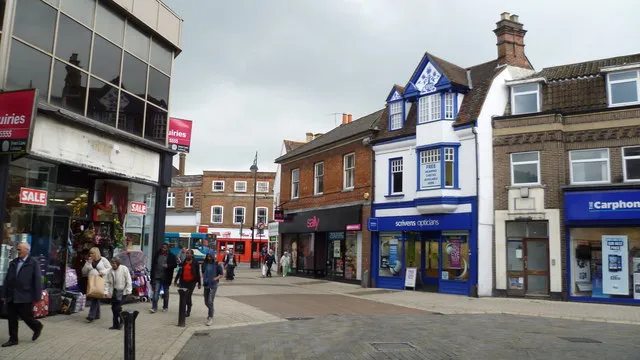
Photo: Jeremy Bolwell , CC BY-SA 2.0, via Wikimedia Commons
The traditional innovation centre has a controlled temperature, a visitor book and a Wi-Fi password printed on a laminated card. It is a poor rehearsal for a street where the bins are full, the connectivity drops behind a Victorian terrace, and half the residents have stopped reading the consultation letters.
That is why the more interesting work in UK civic technology has migrated to living labs: council-led programmes that deploy sensors, edge compute and digital services in real places with real users. They are messier, slower and considerably more instructive than a showroom. Here are ten towns and cities worth watching, and what each one teaches an engineering team about building systems that survive contact with the public realm.
Bristol
Bristol has the longest institutional memory in this field, having run open programmable city infrastructure well before the current wave of interest. Its value now lies in how deployments are co-designed with the neighbourhoods that host them, and in a procurement posture that treats city data as a public asset with conditions attached. The lesson: build the governance model before the sensor mesh.
Glasgow
Glasgow's operations-centre approach pairs environmental and transport data with a single view for service teams. What makes it useful is the discipline of asking what a duty officer needs at 6am in February, rather than what a data scientist finds interesting. The lesson: design for the night shift.
Sunderland
A city that has turned its industrial inheritance into test space, using former works sites and city-centre corridors for connectivity and edge trials. The practical value is in the physical constraints — awkward buildings, mixed ownership, legacy power — which is where most real deployments fail.
Bradford
Bradford's air quality and connected-places work has had to operate across an exceptionally diverse set of wards, languages and trust levels. Its contribution to the field is a granular approach to consent and explanation: what a resident is told, in which language, and what happens when they say no.
Belfast
Deployment in Belfast carries a dimension many mainland programmes underestimate. Geography, community identity and history shape whether a sensor box on a lamppost is read as service improvement or surveillance. The lesson: trust is a technical requirement, not a communications afterthought.
Hull
A fibre-rich city with a long record of flooding, Hull has been a natural site for low-cost environmental sensing and community-facing resilience tools. The engineering point is durability: anything installed in a flood-exposed streetscape must be maintainable by a small team with a van, not a specialist crew flown in.
Coventry
Coventry has become a staging ground for transport innovation, including very light rail and connected vehicle corridors. Its usefulness as a testbed comes from the awkward interfaces — between vehicles and kerbside infrastructure, between a trial and a highway authority's liability regime.
Peterborough
A long-standing future-city programme with a strong circular-economy flavour, Peterborough has experimented with energy, waste and retrofit data in combination rather than in silos. The lesson: civic data becomes valuable when two service areas are forced to share it.
Newport
Welsh public service boards operate under a statutory duty to consider long-term wellbeing, which changes the conversation about what a pilot is for. Newport's programmes illustrate how a legal framework can push engineers towards outcomes and away from gadgetry.
Dundee
Dundee has combined digital health interests with place-based deployment in a colder, more dispersed urban fabric. The result is useful evidence on how services behave when the population is spread out and the weather is unkind — the normal condition of most of the UK.
The procurement lesson nobody writes down
Across all ten, the recurring failure is not technological. It is the assumption that a pilot can be procured like a product. Council procurement teams are bound by standing orders, subsidy control and value-for-money tests designed for buying things, not for buying learning. When a lab needs to change its sensor specification in month three, the contract cannot move.
The places that do this well build flexibility into the structure: shorter terms, explicit variation mechanisms, and a clear separation between the research component and any operational service. They also stop pretending that a pilot is a procurement rehearsal for a larger contract, because that framing incentivises vendors to over-promise on scale.
Data governance is the product
It is tempting to treat the sensor network as the achievement and the governance as paperwork. The reverse is true. The durable output of a living lab is a set of decisions about who may collect what, how long it is retained, who can re-use it, and how a resident can see and contest it. Teams that get this right find the next deployment dramatically easier. Teams that defer it discover, usually at the point of scale-up, that they cannot legally use their own data for the purpose they intended.
Scaling past the demo
The uncomfortable truth about living labs is that most do not scale, and often should not. A pilot that works because two committed officers and one academic partner are manually reconciling data every Friday is not a service. The test of a testbed is whether it produces a specification that a mainstream team can operate without heroics: a maintenance regime, a unit cost, a failure response, an exit plan for the hardware.
Engineering leaders watching these programmes should read them for the boring artefacts — the operating model, the data-sharing agreement, the decommissioning clause. Those are the parts that travel. The dashboard does not.